The rise of real-time rendering and LED wall technology has transformed filmmaking workflows globally, and virtual production China capabilities have expanded rapidly in recent years. LED volume stages, real-time engines, and integrated camera tracking systems now exist across several major production hubs. However, international producers often misunderstand how these facilities operate in practice compared to Western virtual production environments.
Virtual production is not simply a studio rental. It requires alignment between technical planning, real-time content pipelines, and production logistics China coordination. This guide explains how LED volume filmmaking actually works on the ground in China, including technical realities, budget implications, crew workflow, and strategic planning considerations.
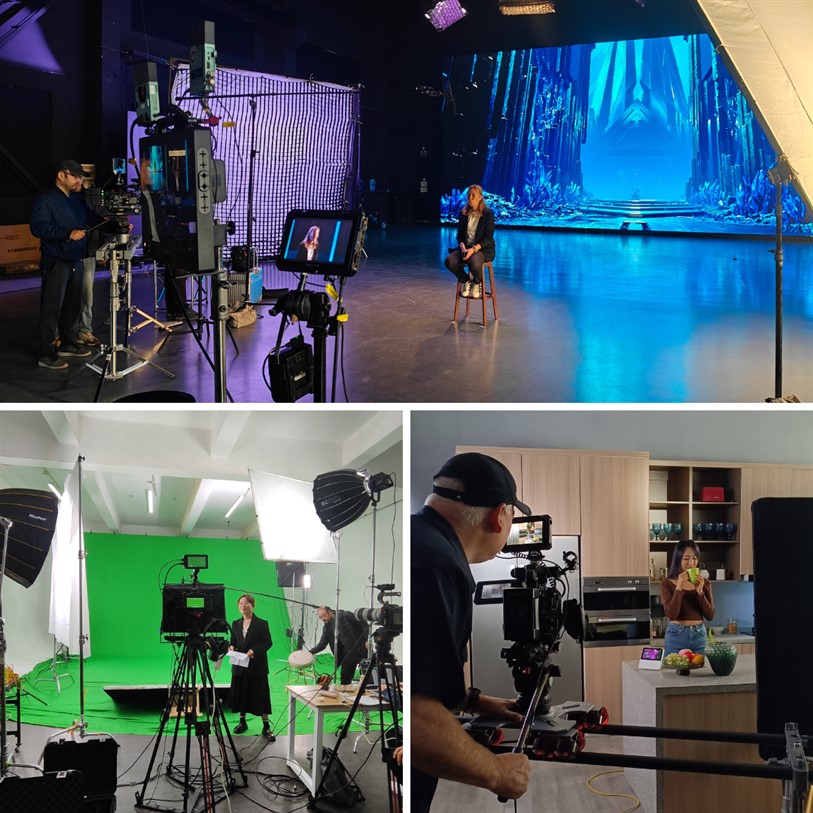
Virtual Production China: Current Infrastructure Landscape
China’s virtual production ecosystem has grown quickly, especially in Tier 1 production centers.
Major hubs include:
- Shanghai — commercial and advertising-focused LED volumes
- Beijing — film and television-oriented stages
- Shenzhen — technology-driven virtual production environments
- Hangzhou — emerging real-time content pipelines linked to animation and gaming industries
Facilities vary widely in capability. Some stages offer full Unreal Engine pipelines with camera tracking and pre-built workflows. Others provide LED walls without full virtual production integration.
Producers must confirm:
- Real-time engine compatibility
- Camera tracking system availability
- Pixel pitch and resolution
- Ceiling height and stage size
Not all LED stages function as full virtual production environments.
LED Volume Workflow Differences vs Traditional Studio Shooting
Virtual production changes how departments collaborate.
Key differences include:
- Previsualization becomes critical before shooting
- Lighting design integrates with digital environments
- Camera movement must align with tracking systems
- Art department shifts toward digital asset creation
Unlike traditional filmmaking, many creative decisions must be locked earlier.
International teams unfamiliar with real-time workflows may underestimate pre-production time requirements.
Successful virtual production China projects prioritize early collaboration between creative, technical, and VFX departments.
Equipment Strategy for LED Volume Filming
Camera and lens choices directly affect LED wall performance.
Important considerations:
- Camera sensor readout speed to avoid moiré
- Lens characteristics compatible with tracking systems
- Color pipeline alignment between LED panels and camera sensors
Common setups include:
- ARRI and RED digital cinema cameras
- Accurate color calibration tools
- Real-time monitoring stations
Camera package China planning should include:
- Lens testing against LED wall reflections
- Matching frame rates with panel refresh rates
- Dedicated playback monitors for virtual environment validation
Ignoring technical compatibility can compromise visual realism.
Crew Structure and Department Coordination
Virtual production demands hybrid skill sets.
Typical crew additions include:
- Virtual production supervisor
- Unreal Engine operators
- Tracking system technicians
- Real-time compositing specialists
Traditional departments still play essential roles, but workflows change.
DPs collaborate closely with digital environment artists.
Gaffers adjust lighting to blend physical and digital sources seamlessly.
Bilingual crew help bridge communication between international creatives and local technical operators.
Clear hierarchy prevents workflow bottlenecks during real-time adjustments.
Budget Realities for Virtual Production China
Virtual production introduces different cost structures compared to location-based filming.
Cost drivers may include:
- LED volume stage rental
- Real-time rendering technicians
- Digital environment development
- Previsualization and testing days
- Technical setup time
Savings may occur through reduced travel or fewer physical builds.
However, early-stage planning costs increase.
Production budget China planning must account for:
- Additional prep time
- Data management requirements
- Rendering and asset creation pipelines
Comparing virtual production directly to traditional shooting costs often leads to unrealistic expectations.
Production Logistics China and Studio Integration
LED volume studios offer controlled environments but still require structured logistics planning.
Key considerations:
- Equipment load-in schedules
- Power capacity planning
- Network infrastructure for real-time rendering
- Secure data handling
Studio infrastructure varies significantly.
Some facilities provide integrated pipelines. Others require external vendors.
International teams should verify whether:
- Tracking systems are permanently installed
- Calibration technicians are included
- Technical support operates during overnight shoots
Operational clarity reduces risk during production days.
Cross-City Production and Virtual Workflow Integration
Many productions combine LED volume shooting with real-world locations.
Cross-city production planning may involve:
- Matching lighting continuity between studio and location footage
- Transporting camera packages between cities
- Coordinating VFX teams remotely
Shanghai-based LED stages often support commercial shoots, while Beijing facilities align with narrative film production.
Grouping studio days together improves efficiency.
Virtual production reduces travel for certain sequences but does not eliminate traditional filming logistics.
Filming Permits and Regulatory Context
Virtual production simplifies some permit requirements.
Advantages include:
- Reduced public filming permits
- Fewer crowd-control issues
- Controlled shooting environments
However, regulatory considerations remain relevant.
Examples:
- Drone regulations China if combining aerial plates
- Import permits for specialized equipment
- Data security considerations for certain digital assets
Studio filming may reduce administrative complexity but does not remove compliance planning entirely.
When Virtual Production Makes Sense in China
Virtual production suits specific production types.
Ideal use cases:
- Automotive interiors or driving simulations
- Sci-fi environments requiring precise lighting
- International campaigns needing multiple environments without travel
- Weather-sensitive scenes
Less suitable scenarios include:
- Large physical action sequences requiring extensive space
- Scenes heavily dependent on unpredictable natural elements
Decision-making should evaluate creative goals alongside operational feasibility.
Technical Risks and Mitigation Strategies
Virtual production introduces unique risks.
Common challenges:
- Tracking calibration drift
- Color mismatch between LED and camera
- Moiré patterns caused by pixel structure
- Latency between camera movement and background rendering
Mitigation strategies include:
- Technical rehearsal days
- Camera and lens testing sessions
- Dedicated calibration technicians
- Pre-approved digital environments
Preparation reduces real-time troubleshooting during shooting.
Timeline Planning for Virtual Production China
LED volume projects require longer pre-production timelines.
Key stages include:
- Previsualization and asset creation
- Technical testing
- Environment integration
- Calibration setup
On-set shooting may become faster once preparation is complete.
Producers should avoid compressing pre-production timelines.
The efficiency of virtual production comes from preparation, not on-set improvisation.
Operational Perspective for International Producers
Virtual production China infrastructure continues to evolve rapidly, offering powerful tools for controlled cinematic environments. Success depends on understanding that LED volume filmmaking is primarily a planning-intensive process rather than a technology shortcut.
Core execution principles include:
- Locking creative decisions early through previs.
- Verifying technical compatibility between camera, lens, and LED systems.
- Building collaborative workflows between physical and digital departments.
- Structuring realistic budgets that account for asset creation and technical support.
When production logistics China planning integrates virtual workflows properly, LED volume studios provide flexible, scalable environments that reduce travel complexity while enabling sophisticated visual storytelling for international productions.