Effective film production communication China workflows determine whether a project runs smoothly or becomes delayed by misunderstandings. Foreign crews often assume that technical standards are the main challenge when filming in China, but communication structure is usually the defining factor.
Language differences represent only one layer. Cultural expectations, production hierarchy, approval chains, and messaging platforms influence how information flows on set. Understanding these operational dynamics early helps avoid costly delays, improves crew morale, and ensures that creative decisions translate clearly into execution.
This guide outlines how communication actually functions on Chinese sets and how international teams can adapt without compromising efficiency.
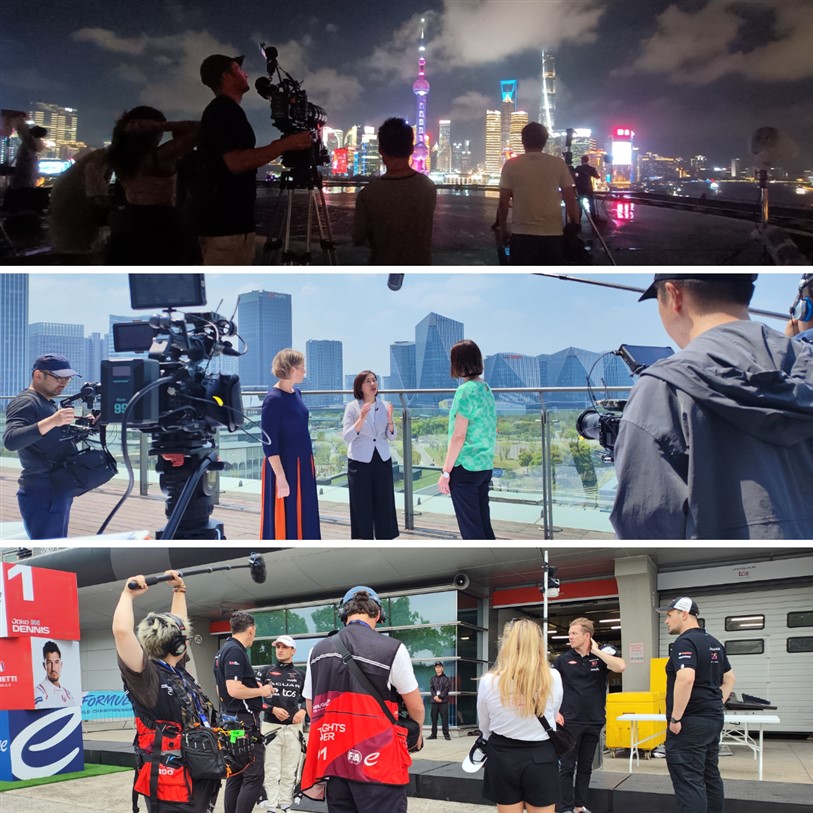
Film Production Communication China: Understanding Workflow Hierarchy
Communication flows differently compared to many Western productions.
Chinese film crews often rely on structured hierarchy:
- Director and client communication passes through production management.
- Department heads filter instructions to their teams.
- Decisions are centralized rather than distributed.
Direct communication between foreign crew and junior local crew may not always be expected.
Instead, communication typically runs through:
- Line producer China or production manager
- Bilingual assistant directors
- Department coordinators
Understanding this structure prevents confusion and avoids situations where multiple instructions reach crew simultaneously.
The Role of Bilingual Crew in Film Production Communication China
Bilingual crew members are not just translators. They act as operational bridges.
Key roles include:
- Bilingual first assistant director
- Production coordinator
- Camera assistant or gaffer familiar with international workflows
These team members interpret not only language but production expectations.
Literal translation often fails in fast-paced environments. Effective bilingual crew translate intent, tone, and context.
Without them, instructions may be technically correct yet operationally ineffective.
Producers should prioritize bilingual communication roles early during pre-production.
Messaging Platforms and Communication Channels
Western productions rely heavily on email and call sheets.
In China, communication platforms differ.
Common tools include:
- WeChat for real-time coordination
- Group chats for departments
- Voice messaging for rapid clarification
Call sheets remain essential but are often supplemented by ongoing messaging.
Foreign crews unfamiliar with this approach may find information moving faster than expected.
Clear communication strategy includes:
- Centralized group chat structure
- Defined communication channels for each department
- Bilingual summaries of daily plans
Over-fragmented messaging leads to missed updates.
Pre-Production Communication and Briefing Strategy
On-set communication starts during pre-production.
Detailed preparation reduces translation complexity.
Recommended practices:
- Visual references instead of long written descriptions
- Shot lists supported by diagrams
- Equipment diagrams translated into simplified workflows
Production logistics China planning should include bilingual technical briefings.
Department heads benefit from advance documentation rather than day-of explanations.
Complex creative ideas become easier to execute when visualized clearly.
Cultural Communication Styles and Decision-Making
Communication in China often prioritizes harmony and clarity of authority.
Crew members may avoid openly challenging instructions, even if problems exist.
Foreign directors should understand:
- Silence does not always indicate agreement.
- Questions may arise privately rather than publicly.
- Feedback loops may require proactive prompting.
Encouraging structured check-ins improves communication reliability.
For example:
- Confirming understanding through repetition.
- Asking department heads to summarize instructions.
This approach reduces misinterpretation without creating tension.
Coordination Between Departments During Cross-City Production
Cross-city production introduces communication complexity.
Different cities may use different crew networks.
Variations include:
- Regional dialect differences.
- Local production habits.
- Equipment rental China providers with different standards.
Standardizing communication methods across cities becomes essential.
Producers should create:
- Unified terminology for equipment.
- Shared production documents.
- Centralized bilingual contact lists.
Location scouting China teams should align communication expectations with local crew before shooting begins.
Communication and Filming Permits
Regulatory communication plays a significant role when filming in China.
Filming permits often involve multiple authorities:
- Local government offices
- Property management
- Police coordination for public spaces
Communication chains may include intermediaries.
Foreign crew members should avoid direct negotiation with officials unless coordinated through production management.
Clear internal communication ensures that permit conditions are followed.
Miscommunication about permitted activities can stop production temporarily.
Managing Time Pressure and Communication Under Tight Schedules
Timeline compression is common.
Many productions face rapid shooting schedules and late creative approvals.
Under pressure:
- Instructions may shorten.
- Translation becomes less precise.
- Assumptions increase.
Solutions include:
- Pre-agreed terminology for technical tasks.
- Visual blocking rehearsals instead of verbal explanation.
- Written confirmation of last-minute changes.
Efficient communication systems reduce stress and prevent cascading delays.
Equipment Communication and Technical Terminology
Technical language differences can create misunderstandings.
Examples include:
- Camera package China naming variations.
- Lighting terminology translated differently across regions.
- Lens or rigging terminology unfamiliar to certain crews.
Using reference images and diagrams improves clarity.
Equipment rental China providers often supply bilingual technicians familiar with international gear.
Producers should confirm technical compatibility early to avoid last-minute confusion.
Communication Risks and How to Mitigate Them
Common communication challenges include:
- Multiple approval chains causing delayed decisions.
- Informal messaging replacing formal instructions.
- Translation gaps during creative discussions.
- Assumptions about cultural norms.
Risk mitigation strategies:
- Establish clear communication hierarchy.
- Confirm decisions through written summaries.
- Limit the number of people giving instructions directly to departments.
Structured communication reduces misunderstandings without slowing workflow.
Practical Communication Framework for Foreign Crews
Successful film production communication China workflows typically include:
- Bilingual leadership positions embedded in key departments.
- Defined communication hierarchy agreed during pre-production.
- Messaging platforms integrated into daily workflow.
- Visual references replacing complex verbal explanation.
- Centralized coordination through production management.
- Structured confirmation of instructions.
Communication challenges rarely come from language alone. They arise from differences in workflow expectations.
Foreign producers who adapt to local communication structure gain faster execution, better crew alignment, and smoother production outcomes when filming in China.