Executing pharma video production China projects requires a different operational framework than standard corporate filming in China. Pharmaceutical plants, biotech labs, and R&D facilities operate under strict regulatory, safety, and confidentiality controls. International producers must align creative goals with compliance protocols, cleanroom procedures, and internal review processes.
China’s biotech and pharmaceutical sectors continue to expand in 2026, with advanced campuses across major cities and industrial parks. However, filming inside these environments demands careful coordination between corporate compliance teams, facility management, and production logistics China planning. This guide outlines how such projects function in practice.
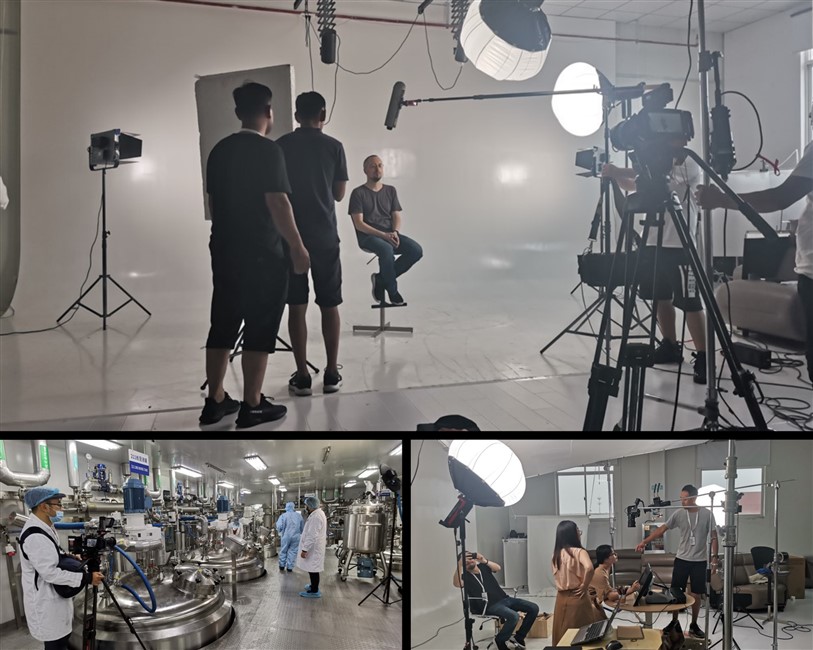
Pharma Video Production China: Regulatory and Compliance Structure
Pharmaceutical and biotech filming rarely operates under a simple location agreement. Approval structures typically include:
- Corporate communications approval
- Legal and compliance review
- On-site operations management authorization
- Quality assurance department oversight
In some cases, additional government notification may be required if filming extends beyond private property or involves exterior drone shots.
Compliance departments often request script outlines, interview questions, and shot lists in advance. Visual messaging must align with regulatory communication standards.
Producers should anticipate multiple review rounds before production approval is granted.
Cleanroom and Controlled Environment Access
Many biotech facilities include cleanrooms or classified laboratory environments.
Access requirements may include:
- Sterile protective clothing
- Anti-static equipment
- Limited crew size
- Pre-cleaned camera and lighting equipment
- Equipment air shower protocols
Cleanroom filming introduces technical constraints. Heavy lighting setups are rarely permitted. Compact camera package China configurations and battery-powered LED systems are preferred.
Producers must plan for restricted movement and limited setup time inside sensitive zones.
Technical recce visits are essential to evaluate feasibility before finalizing shot lists.
Confidentiality and Intellectual Property Protection
Pharma and biotech companies maintain strict intellectual property protections.
Common restrictions include:
- No filming of proprietary machinery components
- Restricted laboratory bench visibility
- Blurring of digital displays or whiteboards
- Controlled interview messaging
Non-disclosure agreements often extend to all crew members. Some facilities require passport submission in advance for security clearance.
Footage review before release is standard. Producers should build post-production approval cycles into their timeline.
Understanding these boundaries early prevents creative revisions late in the process.
Production Logistics China in Active Research Facilities
Pharma video production China often occurs in operational research environments. Unlike factory shoots, these facilities prioritize safety and sterility over production flexibility.
Operational challenges may include:
- Strict daily access windows
- Escort-only movement between zones
- Equipment storage limitations
- Sound challenges due to ventilation systems
Coordination with facility managers helps minimize disruption to research workflows.
Weekends or off-peak hours often provide more flexibility, though laboratory environments may operate continuously.
Careful planning ensures production does not interfere with sensitive research activities.
Filming Permits and External Campus Coordination
Many pharmaceutical campuses are located in designated industrial parks. Exterior filming may require:
- Park management approval
- District-level filming permits
- Police notification for larger crew presence
- Drone regulations China compliance for aerial shots
Public visibility increases administrative oversight.
Exterior drone filming often requires airspace authorization even within private campus boundaries.
Permit planning should align with internal corporate approval timelines to avoid schedule gaps.
Crew Structure and Bilingual Coordination
Pharma video production China typically involves a hybrid crew structure.
International stakeholders may include:
- Global marketing teams
- Scientific advisors
- Brand compliance officers
Local teams provide:
- Regulatory navigation
- Bilingual communication support
- Vendor coordination
- Equipment sourcing
Clear role definition prevents confusion between corporate compliance authority and production leadership.
Bilingual crew help mediate technical discussions between researchers and international creative teams.
Small, highly skilled crews are often more effective in controlled environments than large-scale teams.
Equipment Strategy in Biotech Settings
Technical adaptation is critical in laboratory environments.
Equipment considerations include:
- Compact camera bodies to fit tight lab spaces
- Battery-powered lighting to avoid cable hazards
- Quiet cooling systems to reduce ambient noise
- Minimal footprint tripods or handheld stabilization
Large grip packages are rarely practical.
Equipment rental China networks in major cities offer suitable compact cinema systems. However, specialty macro lenses or scientific imaging tools may require advance sourcing.
Importing equipment through ATA carnet China procedures is possible but adds timeline complexity.
Backup planning remains essential due to limited reshoot windows.
Budget Structure and Cost Drivers
Production budget China planning for pharmaceutical shoots includes unique cost layers.
Direct cost elements may include:
- Cleanroom compliance preparation
- Safety gear procurement
- Security clearance processing
- Extended prep days for internal approvals
Indirect costs often arise from:
- Multiple compliance review cycles
- Restricted access windows extending shoot days
- Translation and documentation preparation
- Controlled crew size requiring additional scheduling flexibility
Unlike automotive or factory shoots, location fees may not be primary cost drivers. Administrative time and approval cycles influence budgets more significantly.
Transparent scheduling reduces financial surprises.
Cross-City Production in Pharma and Biotech
Large pharmaceutical companies often operate facilities across multiple Chinese cities.
Cross-city production considerations include:
- Separate facility approval in each location
- Permit resets for exterior campus filming
- Equipment transport coordination
- Alignment of corporate communication teams across regions
Transporting equipment between cities requires careful planning, especially for battery-powered systems or specialty medical filming tools.
Grouping filming by geographic clusters improves efficiency.
Industry-Specific Compliance Challenges
Pharma and biotech video production intersects with regulated messaging standards.
Potential compliance factors include:
- Restrictions on therapeutic claims
- Limitations on depicting medical procedures
- Government health communication regulations
- Data protection laws for patient interviews
Some projects may require coordination with health authorities if content references clinical outcomes.
Producers should engage compliance teams early to clarify boundaries before scripting interviews.
Timeline Planning and Internal Approval Cycles
Pharmaceutical companies operate under structured communication protocols. Approval cycles often exceed standard commercial timelines.
Producers should plan for:
- Script and storyboard pre-approval
- Facility access authorization
- Legal review of interview questions
- Post-production compliance review
Compressed timelines increase risk of incomplete approvals.
Clear documentation and simplified creative briefs accelerate internal decision-making.
Advance scheduling of review meetings prevents delays.
Risk Mitigation and Operational Stability
Pharma video production China carries lower physical risk than automotive shoots but higher compliance exposure.
Mitigation strategies include:
- Detailed pre-production documentation
- Early safety walkthroughs
- Backup interview locations outside cleanrooms
- Structured communication channels between corporate and production teams
Maintaining a flexible shot list allows adaptation if access to certain labs becomes restricted unexpectedly.
Written confirmation of approved filming zones prevents misunderstandings.
Operational Perspective for International Producers
Pharma video production China requires disciplined planning, sensitivity to compliance, and strong bilingual coordination. Success depends less on visual scale and more on alignment with regulatory culture and corporate governance structures.
Key execution principles include:
- Treating compliance review as a core production stage.
- Adapting equipment strategy to sterile environments.
- Aligning filming permits with corporate approval cycles.
- Reducing crew footprint to increase operational flexibility.
China’s biotech and pharmaceutical sectors provide advanced facilities and global-scale manufacturing environments. With structured planning and realistic timelines, pharmaceutical video projects can achieve both compliance integrity and compelling visual storytelling in 2026.