Understanding the difference between a China fixer vs production company is essential for international producers planning filming in China. The distinction is not simply about scale or cost. It affects project workflow, permit coordination, crew structure, budgeting strategy, and overall production risk.
Many foreign teams assume these roles are interchangeable. In practice, they represent different operational models within production logistics China. Choosing incorrectly can create communication gaps, budget inefficiencies, or administrative delays. This guide outlines how each role functions in real-world production environments and when one structure becomes more effective than the other.
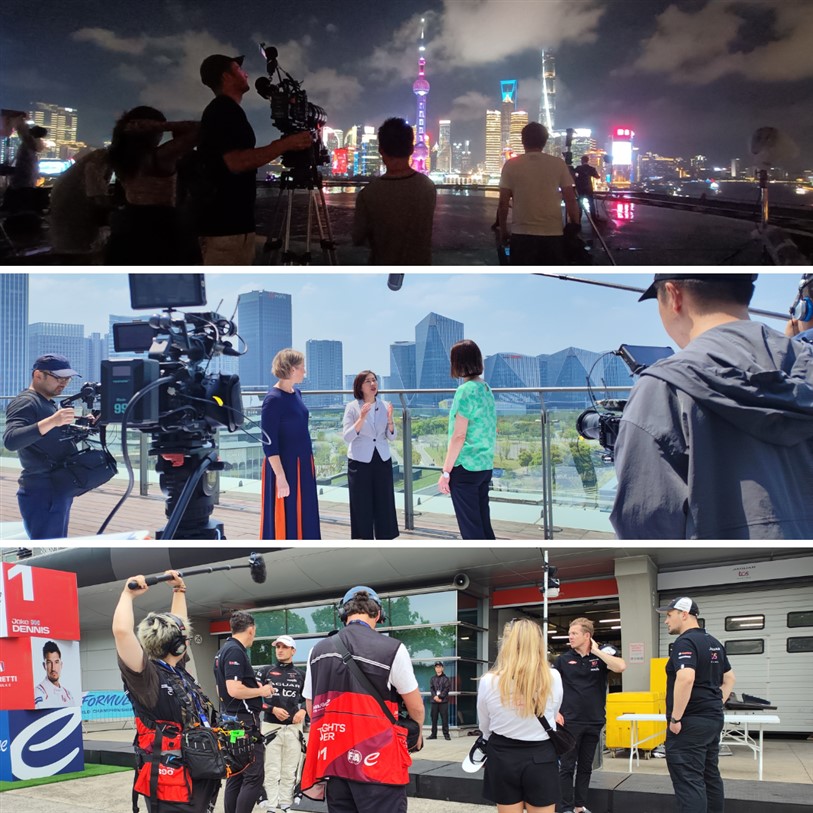
China Fixer vs Production Company: Core Role Definitions
A China fixer typically focuses on logistical execution and local coordination. Responsibilities often include:
- Location scouting China support
- Permit coordination
- Translation and bilingual crew facilitation
- Vendor sourcing and negotiations
- On-ground troubleshooting
A production company usually provides broader services:
- Creative development support
- Department-level crew hiring
- Equipment rental China coordination
- Production management structure
- Financial administration and budgeting
While both roles overlap, the difference lies in scope and responsibility. A fixer acts as an operational facilitator. A production company manages larger structural elements of the project.
Understanding this distinction prevents unrealistic expectations about deliverables.
Workflow Structure and Decision-Making Authority
The organizational structure changes significantly depending on whether a fixer or production company leads local execution.
Fixer-led projects:
- Often driven by external producers or agencies.
- Decision-making remains centralized outside China.
- Local teams execute based on detailed direction.
Production company-led projects:
- Integrate creative and logistical decisions locally.
- Department heads may report through local production hierarchy.
- Budget management becomes centralized within one structure.
Projects with tight timelines benefit from clear authority lines. Without defined leadership, overlapping responsibilities can slow execution.
Producers should evaluate whether they need operational support or full-scale production management.
Budget Structure Differences and Hidden Cost Layers
Comparing rates alone rarely reveals the true cost difference between a China fixer vs production company.
Fixer workflows may initially appear more economical because:
- They often operate with smaller administrative overhead.
- International teams retain creative leadership roles.
However, hidden costs can arise when:
- Multiple vendors must be coordinated separately.
- Additional production management layers become necessary.
- Communication inefficiencies increase prep time.
Production company models consolidate services, potentially reducing coordination friction but introducing broader management fees.
Budget planning should include:
- Administrative coordination time
- Translation requirements
- Financial management complexity
- Tax and invoicing structures
The correct structure depends on whether efficiency or autonomy is the primary priority.
Permits and Regulatory Navigation
Permit coordination is one area where role differences become visible.
Fixers often specialize in navigating filming permits and local authority relationships. Their value lies in understanding district-level practices and administrative expectations.
Production companies typically integrate permits into broader production workflow, aligning them with scheduling, budgeting, and technical planning.
Projects involving:
- Drone regulations China
- Government-managed locations
- Large public filming setups
may benefit from integrated management structures, especially when multiple approvals overlap.
Regardless of model, early permit engagement remains critical.
Crew Structure and Communication Dynamics
Crew composition varies depending on chosen workflow.
Fixer-based projects often involve:
- Fly-in department heads
- Local technical crew assembled through fixer networks
- Strong reliance on bilingual crew for communication
Production company models may provide:
- Established department hierarchies
- Pre-existing team relationships
- Integrated technical departments
Communication efficiency influences schedule reliability. Misalignment between international leadership and local execution frequently creates delays.
Choosing the appropriate structure helps maintain clear reporting channels on set.
Equipment Strategy and Technical Integration
Equipment sourcing highlights practical differences between the two approaches.
Fixers typically facilitate vendor connections and negotiate rental terms. International teams retain responsibility for technical decisions.
Production companies often manage equipment strategy holistically, aligning camera package China selection with crew expertise and location constraints.
Considerations include:
- Availability differences between Tier 1 and Tier 2 cities
- Backup gear planning
- Integration between imported equipment and local systems
Projects requiring specialized gear may involve ATA carnet China workflows if flying equipment into the country.
Early technical planning reduces last-minute adjustments.
Cross-City Production Complexity
China’s scale introduces unique challenges when productions move between regions.
Fixer networks may provide localized support within specific cities. Multi-city projects sometimes require multiple fixers or expanded coordination.
Production companies with national reach can maintain consistent workflow across locations, simplifying:
- Permit reapplication
- Vendor coordination
- Crew continuity
Cross-city production increases risk of miscommunication when responsibility is fragmented.
Projects spanning multiple provinces benefit from unified management structures.
Risk Management and Operational Stability
Each model carries distinct risk profiles.
Fixer-based workflows may struggle when:
- Scope expands beyond initial planning.
- Technical complexity increases.
- Multiple departments require integrated coordination.
Production company structures introduce higher overhead but reduce dependency on individual coordinators.
Risk mitigation strategies include:
- Defining responsibilities clearly during pre-production.
- Establishing escalation procedures for regulatory issues.
- Ensuring redundancy within local coordination roles.
Operational resilience depends more on clarity than organizational size.
Industry-Specific Scenarios
Certain project types influence whether a fixer or production company becomes more suitable.
Documentary production
Often benefits from fixer-led workflows due to flexibility and smaller crew size.
Commercial campaigns
Hybrid structures are common, combining international creative leadership with local production company management.
Automotive filming
Road closures and safety compliance often require structured production management.
Industrial or factory shoots
Complex safety procedures favor teams experienced with regulatory coordination.
Matching workflow to industry context improves efficiency.
Timeline Management and Execution Speed
Timeline compression is common in China-based production. Administrative coordination speed directly affects shoot readiness.
Fixers provide rapid response during local challenges, especially in unfamiliar regions.
Production companies may offer greater scheduling stability through integrated planning.
International producers should consider:
- Permit processing timelines
- Crew availability windows
- Equipment sourcing lead times
Aligning organizational structure with schedule pressure helps avoid costly delays.
Practical Decision Framework
When deciding between a China fixer vs production company, consider the following:
Choose a fixer when:
- The international team maintains strong production management internally.
- Projects are smaller or documentary-focused.
- Flexibility and speed outweigh structural integration.
Choose a production company when:
- Projects involve complex logistics or multiple departments.
- Cross-city coordination is extensive.
- Regulatory complexity requires centralized management.
Hybrid models remain common. Many productions use fixers within production company structures to combine flexibility with operational stability.
Operational Perspective for International Producers
The difference between a China fixer vs production company reflects workflow philosophy rather than hierarchy. Both roles provide value depending on project goals.
Producers filming in China should focus less on labels and more on operational needs: permit complexity, equipment strategy, budget control, and communication flow.
Selecting the appropriate structure ensures smoother coordination, more predictable timelines, and reduced risk during production execution.