Planning international productions requires more than understanding regulations. A practical filming in China guide must address how projects actually function on the ground — from permit workflows to equipment sourcing, crew structure, and cross-city logistics. China offers advanced infrastructure, diverse locations, and skilled crew networks, but operational success depends on adapting to local administrative systems and production realities.
This guide explains real workflow considerations for producers preparing filming in China in 2026, focusing on execution strategy rather than theoretical rules.
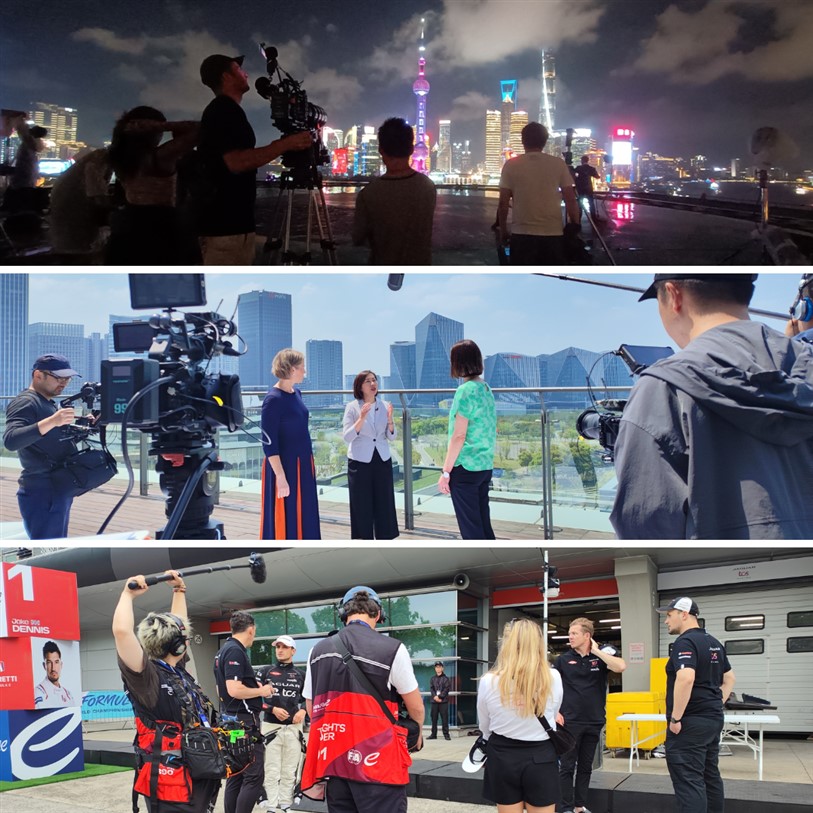
Filming in China Guide: Understanding the Operational Landscape
China’s production ecosystem combines centralized regulatory frameworks with localized enforcement. Producers accustomed to standardized national systems often encounter regional differences in workflow expectations.
Key structural realities:
- Administrative approvals vary by city and district.
- Relationships with local authorities influence efficiency.
- Production logistics China planning must account for regional variations.
Successful productions treat China not as a single environment but as multiple production ecosystems connected by infrastructure.
Major cities provide extensive resources, while emerging locations may require deeper local coordination.
Permits and Regulatory Layers When Filming in China
Filming permits represent one of the most misunderstood aspects of working in China.
There is rarely a single approval covering all scenarios. Instead, producers coordinate multiple layers:
- Government location permissions
- District-level coordination
- Police notification for public filming
- Drone regulations China approvals where applicable
Government-managed locations typically require structured applications. Private locations may still involve local notification depending on visibility and equipment scale.
Public filming exists in grey areas. Small crews may operate with minimal paperwork, while larger setups require formal coordination.
Early permit strategy reduces delays caused by administrative interpretation differences.
Production Logistics China: How Projects Actually Move
Logistics planning shapes production outcomes more than individual creative decisions.
Typical workflow elements include:
- Bilingual crew coordination
- Vendor negotiation
- Transportation planning
- Equipment sourcing
- Schedule alignment with permit timelines
High-speed rail networks enable efficient cross-city production, but administrative resets occur when entering new jurisdictions.
Local line producer China coordination often becomes central to managing these moving parts. Without integrated planning, projects risk fragmentation between departments.
Crew Structure and Collaboration Models
International productions often combine local and traveling teams.
Local crew provide:
- Regulatory familiarity
- Efficient vendor coordination
- Language and cultural mediation
Fly-in crew maintain:
- Creative continuity
- Agency alignment
- Specialized technical roles
Hybrid models dominate because they balance creative control with operational efficiency.
Clear hierarchy reduces miscommunication. Productions benefit from defining decision authority early, especially when multiple languages and departments are involved.
Equipment Strategy: When to Import vs Rent
China maintains strong equipment rental China ecosystems, particularly in Tier 1 cities.
Locally available resources typically include:
- Major cinema camera systems
- Standard lighting packages
- Grip and support equipment
Importing equipment may require ATA carnet China processes and customs coordination.
Producers should evaluate:
- Availability of specific lenses or rigs
- Backup gear requirements
- Cross-city transport logistics
Local rental reduces customs risk and allows rapid replacement if equipment fails.
Specialized projects may still benefit from importing proprietary systems, but planning must account for inspection timelines.
Regional Differences and Location Scouting China
Location diversity is one of China’s strongest advantages. Urban density, industrial environments, and natural landscapes exist within relatively short travel distances.
However, regional differences affect workflow:
- Some cities emphasize strict permit procedures.
- Others rely on relationship-driven coordination.
- Tourism-heavy areas may impose additional supervision.
Location scouting China should include regulatory assessment alongside creative evaluation.
Understanding local attitudes toward filming reduces risk of unexpected restrictions.
Timeline Planning and Execution Speed
China-based productions often operate under compressed timelines due to permit windows, location availability, or agency schedules.
Timeline considerations include:
- Early documentation submission.
- Allowing buffer days between approvals and shoot dates.
- Coordinating equipment arrival with permit clearance.
Local teams frequently demonstrate high efficiency when plans are clear. Problems typically arise when international schedules assume flexibility that administrative workflows cannot support.
Preparation improves adaptability without sacrificing creative intent.
Budget Planning and Cost Structure
Production budget China planning requires understanding indirect cost drivers.
Common budget layers include:
- Administrative coordination
- Translation and documentation
- Travel and accommodation
- Equipment logistics
- Permit coordination
Labor costs may appear competitive compared with Western markets. However, coordination complexity can increase overall spending if workflow is fragmented.
Budget models should prioritize efficiency rather than focusing only on day rates.
Drone Filming and Specialized Compliance
Drone operations introduce additional regulatory layers.
Requirements may include:
- Licensed operators
- Airspace authorization
- Local authority coordination
Drone regulations China vary significantly between regions. Urban environments often impose stricter controls compared with rural areas.
Early drone planning helps avoid schedule disruption.
Other specialized scenarios include:
- Industrial or factory shoots requiring safety approvals.
- Automotive filming involving traffic coordination.
- Sensitive locations requiring script or project review.
Understanding these compliance factors prevents late-stage adjustments.
Risk Mitigation Strategies for International Productions
Risk management in China focuses on adaptability rather than eliminating uncertainty entirely.
Effective approaches include:
- Maintaining backup locations.
- Preparing simplified Chinese-language project summaries.
- Using bilingual crew to facilitate communication.
- Structuring flexible shooting plans.
Many challenges arise from misaligned expectations rather than regulatory barriers.
Clear communication with local teams reduces operational friction.
Cross-City Production Planning
China’s scale encourages multi-location projects, but cross-city production introduces additional planning layers.
Key considerations:
- Reapplying permits in each jurisdiction.
- Managing equipment transport between cities.
- Aligning crew availability with travel schedules.
Grouping locations geographically helps reduce administrative duplication.
Producers often underestimate the logistical reset required when moving between regions. Planning for these transitions improves schedule reliability.
Operational Perspective for Filming in China
A successful filming in China guide emphasizes workflow integration rather than isolated decision-making. Equipment strategy, crew structure, permit coordination, and logistics planning must align from early pre-production stages.
China offers strong technical capability, diverse locations, and experienced professionals. However, effective execution depends on understanding regional differences, regulatory nuances, and communication dynamics.
Producers who approach China with structured planning and realistic expectations gain significant flexibility and production efficiency, allowing creative goals to be achieved within predictable timelines.