The visual identity of Shanghai has made cyberpunk shanghai filming a recurring creative direction for international productions. Neon-lit streets, dense urban architecture, elevated infrastructure, and futuristic skylines create a natural environment for sci-fi and cyberpunk aesthetics without heavy set construction. However, filming in China — especially in a high-density city like Shanghai — requires careful coordination between creative ambition and regulatory reality.
This guide examines how cyberpunk-style productions actually function on the ground, covering location strategy, filming permits, equipment considerations, crew workflow, and practical planning for futuristic urban storytelling.
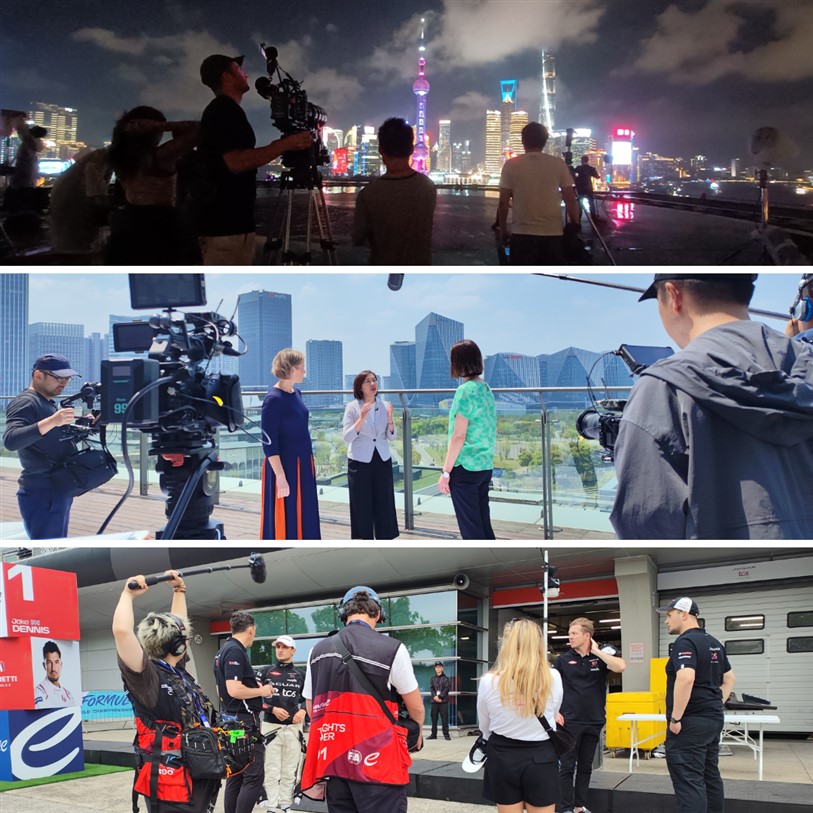
Cyberpunk Shanghai Filming: Why the City Works Visually
Shanghai’s urban design naturally aligns with cyberpunk visual language.
Key characteristics include:
- Layered vertical architecture combining historic and modern elements
- Dense street-level signage and lighting
- Elevated highways and transit lines
- High-rise financial districts with reflective surfaces
- Industrial and residential contrasts within short distances
Unlike purpose-built film sets, these environments require minimal production design to achieve futuristic aesthetics.
Location scouting China for cyberpunk visuals often focuses on contrasts:
- Ultra-modern districts versus older neighborhoods
- Neon-lit retail streets versus industrial zones
- Waterfront skylines combined with transport infrastructure
Understanding how different districts present unique visual identities allows producers to achieve varied looks without excessive travel.
Location Strategy and District Characteristics
Shanghai’s districts offer different cyberpunk visual tones.
Examples include:
Lujiazui Financial District
Glass towers and elevated walkways create high-tech visuals. Permits are typically stricter due to corporate ownership.
Hongkou and Yangpu Areas
Industrial architecture and older structures provide textured urban environments.
Xuhui Waterfront
Modern development combined with open public spaces suitable for wide cinematic framing.
Underground retail passages and transport hubs
High-density lighting and reflective surfaces enhance futuristic aesthetics but require structured access permissions.
Choosing locations depends on balancing visual density with permit feasibility.
Filming Permits and Urban Enforcement Reality
Urban cyberpunk productions often rely on public spaces. Permit strategy becomes central to execution.
Permit considerations may include:
- District-level filming permits
- Property-owner approvals for commercial buildings
- Police notification for crowd control or visible equipment
- Drone regulations China compliance for aerial shots
Small-footprint crews may operate more flexibly in certain areas. Larger setups attract immediate administrative attention.
Night filming adds complexity due to lighting impact and security concerns.
Understanding enforcement patterns helps determine whether scenes should be staged or captured documentary-style.
Production Logistics China in Dense Urban Environments
Shanghai’s density introduces logistical challenges unique to cyberpunk-style filming.
Operational realities include:
- Limited parking for production vehicles
- Noise restrictions in residential areas
- Restricted lighting setups on public sidewalks
- Pedestrian flow management
Transport infrastructure offers advantages. Metro systems and short-distance logistics allow rapid crew movement between locations.
However, heavy gear setups slow mobility. Compact camera package China configurations often prove more effective than large rigs.
Production logistics China planning must prioritize efficiency and mobility.
Equipment Strategy for Cyberpunk Visual Style
Achieving a futuristic aesthetic depends as much on equipment strategy as on location choice.
Common approaches include:
- Lightweight gimbal systems for dynamic street movement
- High-sensitivity camera sensors to capture existing neon lighting
- Portable LED panels for subtle augmentation rather than large setups
- Lens choices emphasizing reflections and depth layers
Shanghai’s reflective surfaces create strong highlights. Careful exposure control prevents blown-out signage.
Equipment rental China networks provide access to modern cinema cameras suited for low-light environments.
Importing specialty lenses through ATA carnet China processes may be justified for distinctive visual signatures.
Drone Filming for Futuristic Cityscapes
Aerial shots often define cyberpunk imagery, but drone usage introduces structured regulatory requirements.
Drone filming may require:
- Airspace authorization
- Licensed operators
- Alignment with filming permits
Central business districts typically impose stricter restrictions.
Producers should plan alternative elevated camera positions when drone approvals become impractical.
Rooftop access can provide similar perspectives with fewer administrative layers.
Early drone planning prevents creative redesign late in the process.
Crew Structure and Workflow Dynamics
Cyberpunk Shanghai filming often blends international creative direction with local execution expertise.
Local crew provide:
- Efficient permit coordination
- Real-time problem-solving in dense environments
- Communication with security or property management
International creatives often lead visual style and narrative direction.
Hybrid teams benefit from bilingual crew to bridge communication gaps.
Small, agile units reduce visibility and improve flexibility when working in high-traffic areas.
Clear hierarchy prevents confusion during fast-paced urban shooting conditions.
Timeline Planning and Night Shoot Considerations
Many cyberpunk visuals rely on night environments.
Night filming introduces logistical considerations:
- Limited permit windows
- Increased security presence
- Crew fatigue management
- Public safety coordination
Weather also influences lighting reflections. Rain can enhance cyberpunk aesthetics but requires contingency planning for equipment protection.
Compressed night schedules require efficient shot planning.
Location recce at the same time of day as shooting helps identify lighting conditions and crowd density.
Budget Structure for Cyberpunk Shanghai Filming
Production budget China planning for cyberpunk projects involves several indirect cost drivers.
Budget factors may include:
- Location fees for commercial districts
- Security supervision costs
- Night shooting premiums
- Transportation coordination in restricted zones
- Additional scouting days to confirm visual feasibility
Large-scale set construction becomes unnecessary when using real environments effectively. However, coordination complexity replaces traditional art department costs.
Flexible scheduling reduces overtime expenses.
Regional Differences Within Shanghai
Shanghai is not visually uniform. Micro-environments within the city influence production planning.
Factors to evaluate include:
- Permit strictness varies by district.
- Visual density differs between commercial and residential zones.
- Accessibility for heavy equipment changes dramatically between locations.
Understanding these nuances allows producers to design efficient shooting routes.
Grouping nearby locations reduces travel time and administrative repetition.
Risk Management in Urban Cyberpunk Productions
Urban filming carries predictable risks:
- Crowd interference
- Security intervention
- Equipment safety in public spaces
- Unexpected lighting changes from signage or traffic
Mitigation strategies include:
- Maintaining small crew footprint
- Using minimal lighting rigs
- Preparing backup locations
- Keeping translated documentation available for authorities
Flexibility remains essential. Creative teams should prepare alternate shot plans to adapt quickly.
Operational Perspective for Cyberpunk Shanghai Filming
Shanghai’s urban environment naturally supports futuristic storytelling. However, successful cyberpunk shanghai filming depends on balancing creative ambition with regulatory awareness and logistical efficiency.
Key execution principles include:
- Selecting locations based on both visual impact and permit feasibility.
- Designing equipment strategy around mobility.
- Integrating drone planning early.
- Maintaining agile crew structures suited to dense urban environments.
When production logistics China planning aligns with Shanghai’s urban realities, the city offers one of the most visually distinctive backdrops for futuristic storytelling in contemporary filmmaking.